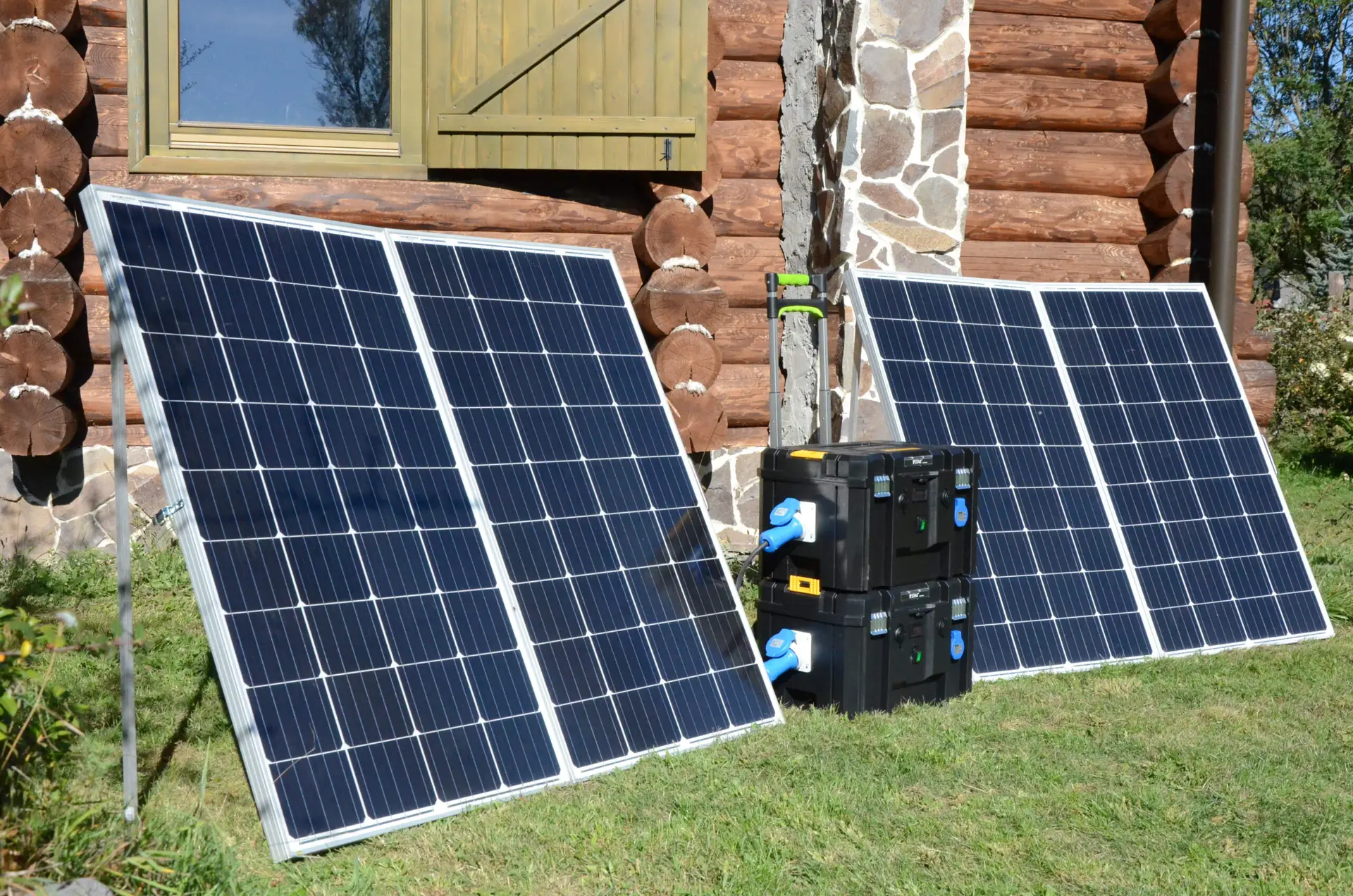
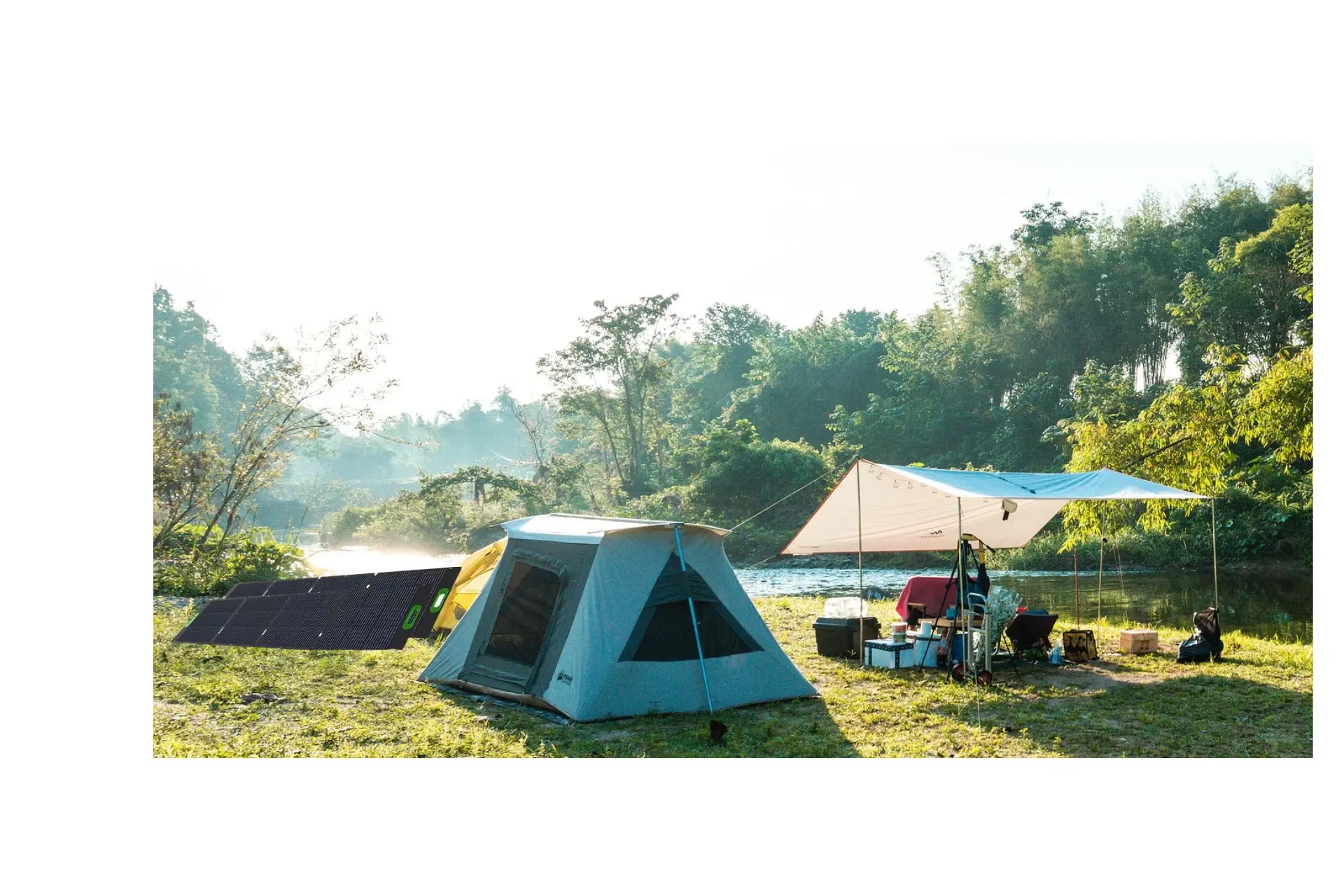

The best solar panels for camping, RVs, and outdoor living are designed to keep you connected to power no matter where you are. But how do you know which solar panel is the right fit?
Are you planning your next camping adventure or prepping your RV for extended travel? Imagine having a reliable energy source while you’re off the grid, powering your devices, lights, and more, all while being eco-friendly.
In this guide, we break down the best solar panels on the market, comparing their performance, portability, and value, so you can make an informed decision. Whether you’re camping for the weekend or living the full-time RV life, there’s a solar solution here for you.
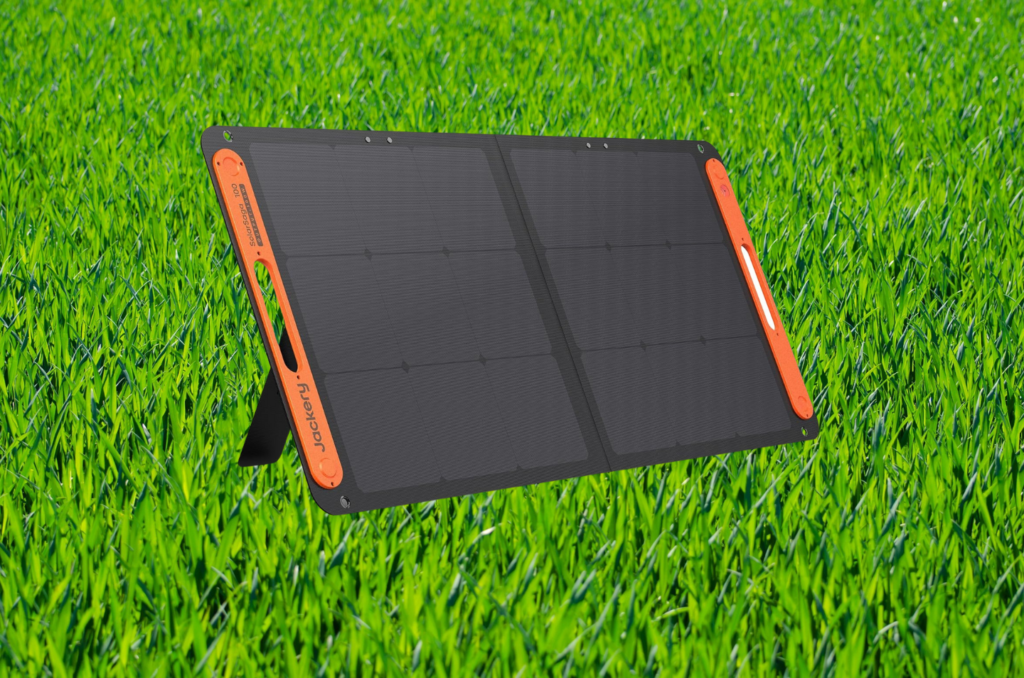
1. Jackery SolarSaga 100W: Lightweight and Portable Power
One of the best solar panels for camping and RV use is the Jackery SolarSaga 100W. This panel is lightweight and foldable, making it an ideal choice for people on the move. Weighing just 9.1 lbs, it’s easy to carry and set up at any campsite. What sets it apart is its high conversion efficiency rate of 23%, ensuring that you get the most out of every bit of sunlight.
The Jackery SolarSaga 100W is one of the most popular and highly recommended best solar panels for outdoor enthusiasts, and for good reason. This portable solar panel is designed for easy transportation and efficient solar energy conversion, making it ideal for campers, RV owners, and those living the outdoor lifestyle.
Product Specifications:
- Wattage: 100W
- Weight: 9.1 lbs (4.1 kg)
- Dimensions (folded): 22 x 24 x 1.8 inches
- Dimensions (unfolded): 48 x 21 x 0.2 inches
- Efficiency: 23%
- Output Ports: 1 USB-C (5V, 3A), 1 USB-A (5V, 2.4A), 1 DC output (18V, 5.5A)
- Solar Cell Type: Monocrystalline
- Waterproof Rating: Not waterproof
Direct and Indirect Solar Charging Speed
The Jackery SolarSaga 100W performs exceptionally well in direct sunlight, with a charging speed of up to 80W to 85W on a bright, sunny day. Under indirect sunlight or cloudy conditions, the efficiency drops significantly to around 30W to 40W, depending on the level of cloud cover. This is typical for solar panels, as indirect sunlight limits the solar conversion rate.
When used in conjunction with a solar generator like the Jackery Explorer series, you can expect full charging of smaller generators like the Jackery Explorer 240 in approximately 6 hours under full direct sunlight. Larger generators, such as the Jackery Explorer 1000, may take about 10-12 hours of direct sunlight for a full charge.
Energy Generated in 1 Hour
In ideal conditions (direct sunlight), the Jackery SolarSaga 100W can generate up to 100 watt-hours of energy in an hour. In indirect sunlight, the energy output decreases significantly to around 30-40 watt-hours per hour, which is still useful for maintaining a charge on small electronics like smartphones or lights but may struggle with larger devices.
Functionality and Usability
The Jackery SolarSaga 100W is easy to use thanks to its foldable, lightweight design. It’s equipped with two kickstands, which allow you to angle the panel optimally toward the sun. This ensures you get the most energy conversion possible, even during shorter daylight hours. Its built-in handles make it easy to carry, and the USB ports provide the added flexibility of directly charging small electronics without needing an intermediary power station or solar generator.
Pros:
- High Conversion Efficiency: The Jackery SolarSaga 100W offers an impressive 23% efficiency rate, which is among the highest for portable solar panels in its class.
- Portability: Weighing just 9.1 lbs, this panel is one of the most portable options, making it ideal for camping and RV travel.
- USB-C and USB-A Ports: Directly charge small devices like phones, cameras, and tablets without the need for a separate solar generator.
- Ease of Use: Foldable design, built-in kickstands, and easy setup make it user-friendly, even for beginners.
Cons:
- Not Waterproof: While durable, the Jackery SolarSaga 100W is not waterproof, meaning it needs protection in rainy conditions.
- Slower Charging in Indirect Sunlight: Like most solar panels, it loses efficiency under cloudy skies, though it still manages to produce enough power for smaller devices.
- Limited Power Output: While 100W is great for smaller devices and solar generators, it may not provide enough energy for heavy-duty appliances like fridges or air conditioners without the use of multiple panels.
Charging Performance
- Direct Sunlight Charging Speed: Around 80W-85W on a clear day, ideal for charging small to medium-sized solar generators and power stations.
- Indirect Sunlight Charging Speed: Drops to around 30W-40W, which is sufficient for charging small devices like smartphones, but charging larger devices will take considerably longer.
Pros and Cons Summary
| Jackery SolarSaga 100W | Pros | Cons |
|---|---|---|
| Portability | Lightweight and foldable, easy to carry for camping or travel. | Not waterproof, requires protection from rain. |
| Energy Efficiency | High conversion rate of 23%, one of the highest for its size. | Lower efficiency in cloudy/indirect sunlight. |
| USB Ports | USB-C and USB-A allow direct charging of small devices. | Limited output for heavy-duty appliances without multiple panels. |
| Kickstand for Easy Setup | Built-in kickstands for optimal sun alignment. | No included carrying case. |
| Price | Affordable compared to other models in its class. | Limited wattage for long-term off-grid use. |
With all these details that we described here, you can have a clearer understanding of what makes the Jackery SolarSaga 100W an excellent choice for outdoor adventures. Its high efficiency and portability make it a favorite for campers and RV owners alike, while its limitations like slower charging in indirect sunlight and lack of waterproofing are factors to consider depending on your specific needs.
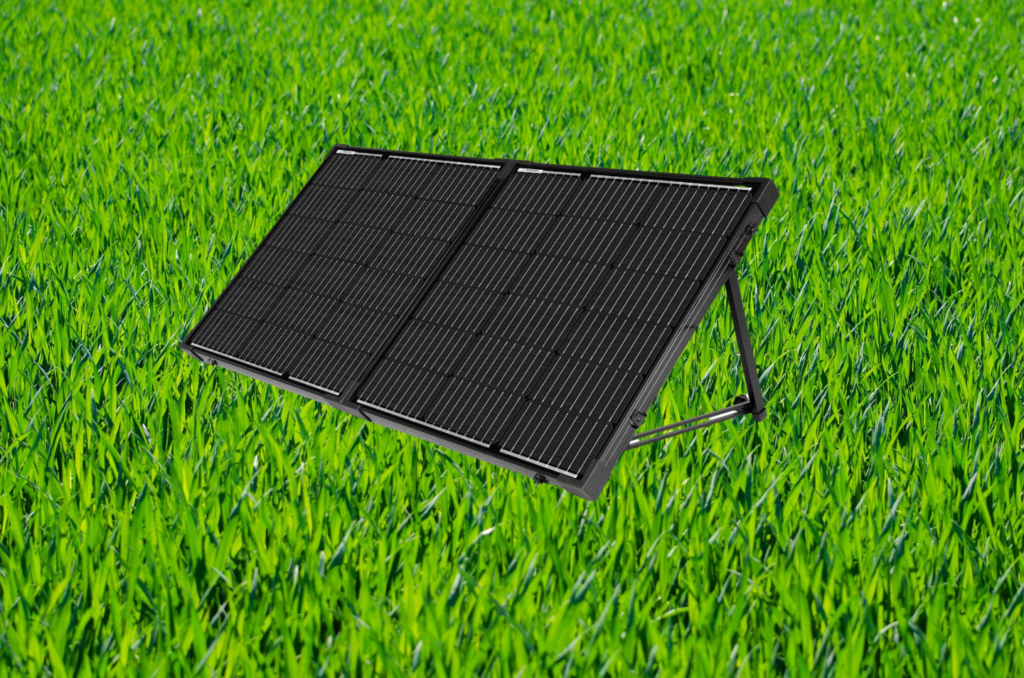
2. Renogy 100W Monocrystalline Solar Panel: A Trusted Outdoor Solar Companion
The Renogy 100W Monocrystalline Solar Panel is another top choice among the best solar panels for camping, RVs, and outdoor living. Known for its durability and reliable performance, this solar panel is a solid investment for those who need a robust power solution for their adventures. Let’s dive deeper into its specifications, performance, and suitability for off-grid use.
Product Specifications:
- Wattage: 100W
- Weight: 14.3 lbs (6.5 kg)
- Dimensions: 42.4 x 20.0 x 1.38 inches
- Efficiency: 21%
- Output Voltage: 12V
- Solar Cell Type: Monocrystalline
- Warranty: 25-year output warranty
- Waterproof Rating: IP65 (junction box), making it durable and weather-resistant
Direct and Indirect Solar Charging Speed
The Renogy 100W Monocrystalline Solar Panel performs exceptionally well in direct sunlight, offering around 80W to 90W of output on a clear day. Under indirect sunlight, such as cloudy weather, its performance dips to about 30W to 45W, which is still impressive compared to other solar panels for camping in the same class. This panel’s efficiency and ability to perform in less-than-ideal conditions make it a great choice for outdoor enthusiasts who want reliability, no matter the weather.
When paired with a solar generator, the Renogy 100W can efficiently charge smaller units like the Renogy Phoenix 300 Power Station in 5-6 hours under direct sunlight. Larger power stations may take 10+ hours, but multiple panels can speed up this process.
Functionality and Usability
This candidate for best solar panel is well-suited for long-term off-grid use due to its durable construction and high-quality materials. The panel comes with pre-drilled holes for easy mounting and is compatible with a wide range of Renogy solar generators and battery systems. The IP65-rated junction box ensures that the panel is protected against water, making it a more robust option for outdoor use in diverse environments.
Pros:
- Durability: The Renogy 100W Monocrystalline Solar Panel is built to last, with a corrosion-resistant aluminum frame and IP65 waterproof rating for outdoor use.
- High Efficiency: With a 21% efficiency rate, it’s one of the better-performing solar panels in terms of converting sunlight into usable energy.
- Compatibility: Easily integrates with Renogy systems and other solar setups, making it a versatile choice for various solar installations.
- 25-Year Warranty: Renogy offers an impressive 25-year warranty on power output, giving users peace of mind regarding long-term performance.
Cons:
- Heavier Than Some Competitors: Weighing in at 14.3 lbs, the Renogy 100W is heavier than portable solar panels like the Jackery SolarSaga 100W, which may be a consideration for users prioritizing portability.
- No Kickstand or Carrying Case: Unlike some other models, this panel doesn’t come with a built-in stand or carrying case, which makes it less user-friendly for quick setup on the go.
Charging Performance
- Direct Sunlight Charging Speed: In optimal conditions, the panel provides around 80W-90W, which is enough to power small solar generators, 12V batteries, and various electronic devices.
- Indirect Sunlight Charging Speed: The panel’s output drops to about 30W-45W in cloudy or indirect sunlight, but this is still enough to keep smaller devices charged.
Pros and Cons Summary
| Renogy 100W Monocrystalline Solar Panel | Pros | Cons |
|---|---|---|
| Durability | Built to withstand harsh weather with a sturdy frame and IP65 rating. | Heavier than some other portable panels at 14.3 lbs. |
| Efficiency | High conversion rate of 21%, ensuring efficient energy use. | Lacks a kickstand or carrying case for easy portability. |
| Versatility | Compatible with various battery systems and generators. | Requires mounting for optimal use, which may not be ideal for all users. |
| Warranty | 25-year power output warranty ensures long-term reliability. | No built-in USB ports for direct device charging. |
| Cost | Affordable for its size and performance in the market. | Performance drops significantly in indirect sunlight. |
Conclusion
The Renogy 100W Monocrystalline Solar Panel is a reliable and durable option for solar penels for camping, outdoor and off-grid use. Its high efficiency, long warranty, and rugged design make it a go-to choice for RV owners, campers, and anyone needing consistent power outdoors. While it’s a bit heavier and lacks the portability features of other panels, it shines when mounted on an RV or as part of a larger solar setup.
For users who need a panel that can weather tough conditions and consistently provide power, the Renogy 100W is a solid option. It’s particularly well-suited for those who already own a Renogy solar system or want to expand their existing setup with a highly compatible and efficient panel.
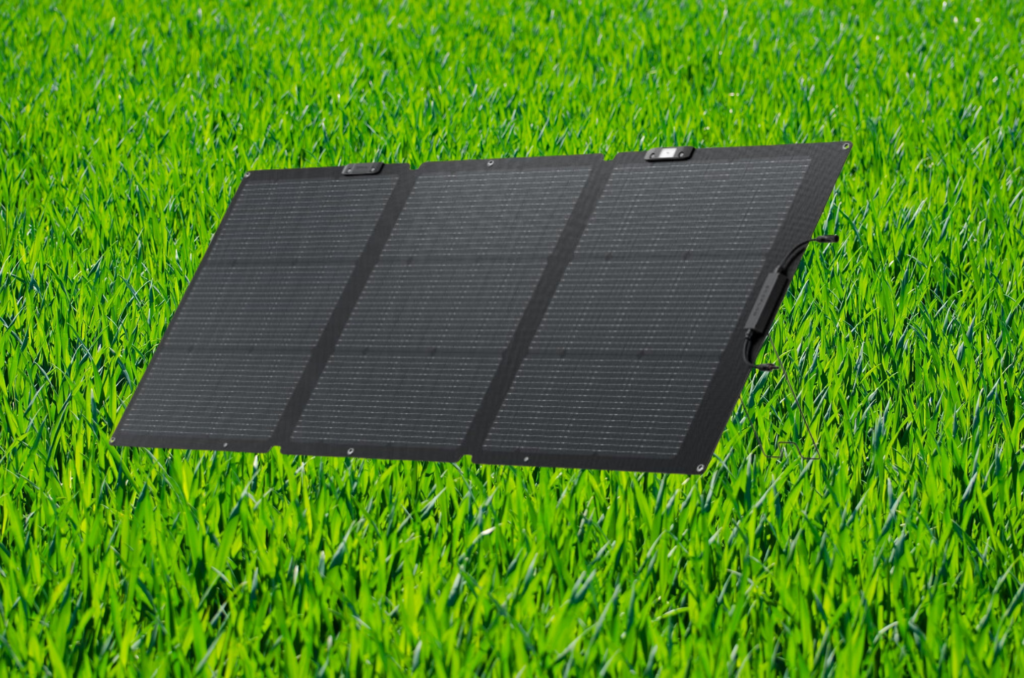
3. EcoFlow 160W Portable Solar Panel: Sleek and Weatherproof
The EcoFlow 160W Portable Solar Panel is a top contender among the best solar panels for camping, RVs, and outdoor living. Known for its portability, sleek design, and weatherproof build, this solar panel is ideal for adventurers seeking a reliable source of solar energy in remote areas. Making it one of the best solar panels for camping. Let’s explore its key features, performance, and suitability for off-grid use.
Product Specifications:
- Wattage: 160W
- Weight: 15.4 lbs (7 kg)
- Dimensions (unfolded): 26.8 x 61.8 x 1.0 inches
- Dimensions (folded): 26.8 x 16.5 x 1.0 inches
- Efficiency: 21-22%
- Solar Cell Type: Monocrystalline
- Waterproof Rating: IP67 (highly waterproof and dust-resistant)
- Connector: MC4 (compatible with most solar generators, including the EcoFlow lineup)
- Warranty: 12-month limited warranty
Direct and Indirect Solar Charging Speed
The EcoFlow 160W Portable Solar Panel delivers an impressive performance in direct sunlight. In optimal conditions, it can output between 150W and 160W, making it highly efficient for charging portable power stations and batteries. On cloudy days or in indirect sunlight, the output typically drops to 50W-80W, which is still decent for maintaining low-power devices or slow-charging a solar generator.
When paired with the EcoFlow River or EcoFlow Delta series, the 160W panel can charge these power stations relatively quickly, adding flexibility to your outdoor energy setup.
Functionality and Usability
The EcoFlow 160W Portable Solar Panel is designed for easy transport, setup, and use. Its foldable design allows it to fit into a backpack or the trunk of a car without taking up too much space. The panel comes with a built-in kickstand that adjusts for optimal sun exposure, making it convenient to use in various environments, whether you’re camping, on an RV trip, or simply powering your home in an emergency.
The IP67 rating ensures that the panel can withstand harsh weather, including rain, snow, and dust, making it perfect for outdoor enthusiasts who don’t want to worry about weather conditions ruining their gear.
Pros:
- High Efficiency: With 21-22% efficiency, it captures and converts solar energy effectively.
- Weatherproof: The IP67 rating ensures that the panel can function in harsh weather conditions, providing reliable power when you need it most.
- Portable Design: Lightweight and foldable, making it easy to carry and store.
- Compatibility: Easily pairs with EcoFlow solar generators and other power stations that use MC4 connectors.
- Adjustable Kickstand: The built-in kickstand allows users to angle the panel for optimal sun exposure.
Cons:
- Pricey: At the higher end of the portable solar panel market, making it an investment.
- Shorter Warranty: Only comes with a 12-month warranty, which is shorter than some competing panels that offer up to 25 years of coverage.
- Performance Dip in Low Light: While its output is decent in indirect sunlight, it’s still significantly lower compared to performance in full sun.
Charging Performance
- Direct Sunlight Charging Speed: The panel can produce its full 160W capacity when exposed to direct sunlight, making it an ideal choice for rapidly charging solar generators and 12V batteries.
- Indirect Sunlight Charging Speed: In lower light conditions, the panel generates about 50-80W of power, which is enough for basic tasks like charging phones, small devices, and slow-charging larger batteries.
Pros and Cons Summary
| EcoFlow 160W Portable Solar Panel | Pros | Cons |
|---|---|---|
| Efficiency | High conversion efficiency of 21-22% for optimal energy generation. | High cost compared to smaller portable panels. |
| Weatherproof | IP67 rating ensures durability in rain, snow, and dusty environments. | Only a 12-month warranty, which may be a downside for some. |
| Portability | Foldable and easy to carry, making it perfect for outdoor activities. | Performance dips significantly in low-light conditions. |
| Compatibility | Works well with EcoFlow and other solar generators with MC4 connectors. | Heavier than some competing portable panels, weighing 15.4 lbs. |
| Versatile Stand | Adjustable kickstand allows for precise sun tracking for better efficiency. | Lacks integrated charging ports, requiring a solar generator or battery system. |
Conclusion
The EcoFlow 160W Portable Solar Panel stands out for its high efficiency, weatherproof build, and portability, making it one of the top options for camping, RVing, and outdoor living. Its sleek, foldable design allows users to carry it with ease, and its high-performance output in direct sunlight makes it a powerful option for those who need reliable solar energy off the grid.
Though it is priced higher and comes with a shorter warranty than some competitors, the EcoFlow 160W‘s durability and performance make it a solid investment. It’s particularly well-suited for those who already use EcoFlow power stations and want a seamless, high-output solar panel to complement their setup.
4. Bluetti PV200 200W Solar Panel: Powerful and Foldable
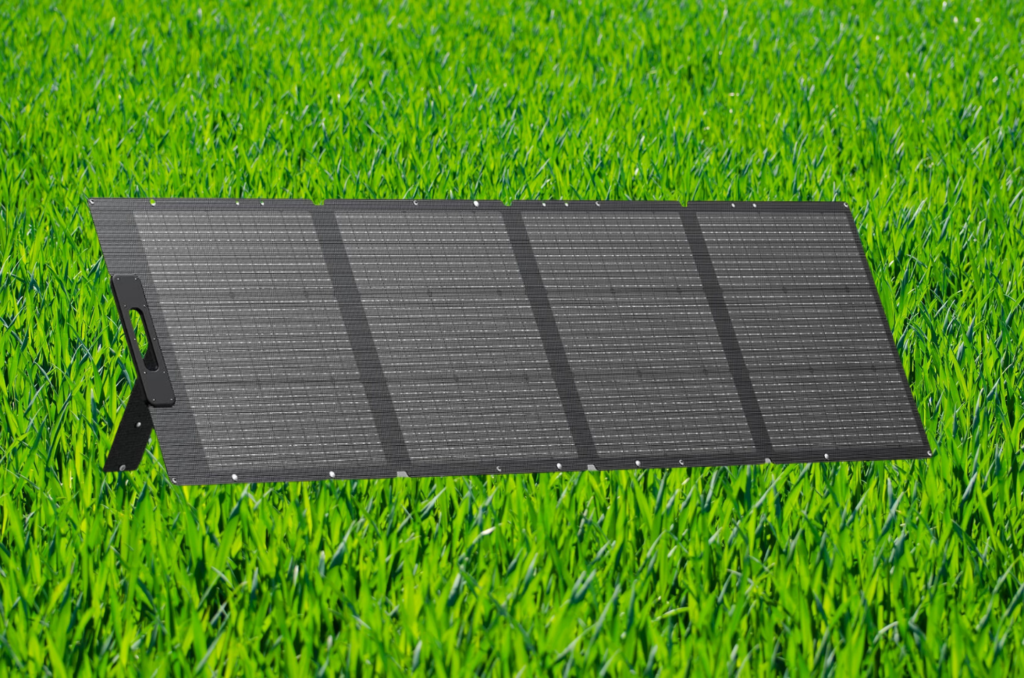
The Bluetti PV200 200W Solar Panel offers a strong balance of power, portability, and efficiency, making it a popular choice among outdoor enthusiasts and those looking to power their RVs, camping trips, or off-grid living setups. As part of the best solar panels lineup, it stands out due to its foldable design and impressive 200W output, delivering more power in a relatively compact package.
Product Specifications:
- Wattage: 200W
- Weight: 16.1 lbs (7.3 kg)
- Dimensions (unfolded): 23.2 x 89.2 x 0.8 inches
- Dimensions (folded): 23.2 x 24.8 x 2.4 inches
- Efficiency: 23.4%
- Solar Cell Type: Monocrystalline
- Waterproof Rating: IP65 (splashproof, but not fully waterproof)
- Connector: MC4 (compatible with most portable power stations, including Bluetti and others)
- Warranty: 12-month warranty
Direct and Indirect Solar Charging Speed
The Bluetti PV200 panel offers impressive efficiency, with a conversion rate of up to 23.4%, making it one of the top performers in its category. In direct sunlight, the panel can reach its full 200W potential, making it highly effective for charging solar generators and other portable power stations quickly.
In indirect sunlight, the power output drops but remains efficient, delivering around 80W-100W. This means that even on cloudy days or in partial shade, the panel will still generate a usable amount of energy, keeping your devices or solar generator slowly charged and functional.
Functionality and Usability
The Bluetti PV200 is designed with portability in mind, featuring a foldable design that makes it easy to store and transport. Its MC4 connectors make it compatible with most solar generators on the market, not just Bluetti’s own lineup, making it a versatile and one of the best solar panel for camping or for anyone looking for high-power solar energy on the go. The solar panel comes with built-in kickstands, allowing users to set it up quickly and adjust its angle for optimal sun exposure.
Despite its high power output, the panel weighs just over 16 lbs, making it relatively lightweight for its wattage class. This makes it suitable for extended camping trips, RV life, or even as a backup power source at home.
Pros:
- High Power Output: 200W of power makes it ideal for charging large solar generators or running multiple devices.
- Foldable Design: The panel’s foldable design ensures easy transport and storage.
- High Efficiency: With a 23.4% efficiency rate, it converts solar energy into usable power more effectively than many competing panels.
- Compatibility: MC4 connectors allow for compatibility with a wide range of solar generators.
- Durable Build: Splashproof design ensures it can handle light rain or damp conditions, making it suitable for outdoor use.
Cons:
- Not Fully Waterproof: While it has an IP65 splashproof rating, the panel is not fully waterproof and should be protected during heavy rain.
- Heavier Than Smaller Panels: At 16.1 lbs, it’s heavier than smaller portable panels, though still manageable for most users.
- Short Warranty: Comes with only a 12-month warranty, which may be shorter than some users would prefer for an investment of this kind.
Charging Performance
- Direct Sunlight Charging Speed: In full sun, the Bluetti PV200 reaches its full 200W output, making it a powerful choice for quickly charging large solar generators or running high-energy appliances.
- Indirect Sunlight Charging Speed: Even in low light conditions, the panel produces around 80-100W, which is enough to keep essential devices running or slowly charge a power station.
Pros and Cons Summary
| Bluetti PV200 200W Solar Panel | Pros | Cons |
|---|---|---|
| High Power Output | Produces up to 200W of solar energy in direct sunlight. | Not fully waterproof, so caution is needed in heavy rain. |
| Efficiency | 23.4% conversion efficiency ensures effective energy capture. | Slightly heavier compared to smaller, lower-wattage panels. |
| Portability | Foldable design with a convenient carrying handle. | The 12-month warranty is shorter than some competing products. |
| Compatibility | MC4 connectors allow it to work with most solar generators. | More expensive than lower wattage models. |
| Durability | Designed to withstand outdoor use with splashproof features. |
Conclusion
The Bluetti PV200 200W Solar Panel is an excellent option for those seeking a high-power, portable solar panel that can handle more demanding off-grid applications. Its foldable design makes it easy to transport, and its compatibility with a wide range of solar generators means that it can fit seamlessly into many different setups.
While it may be heavier and more expensive than smaller panels, its high output, impressive efficiency, and durable design make it a worthwhile investment for serious campers, RV enthusiasts, and off-grid adventurers. Despite its premium price, the Bluetti PV200‘s ability to generate significant energy even in less-than-ideal conditions makes it a reliable and flexible choice for any outdoor solar setup.
5. Goal Zero Boulder 100 Briefcase Solar Panel: Rugged and Sturdy
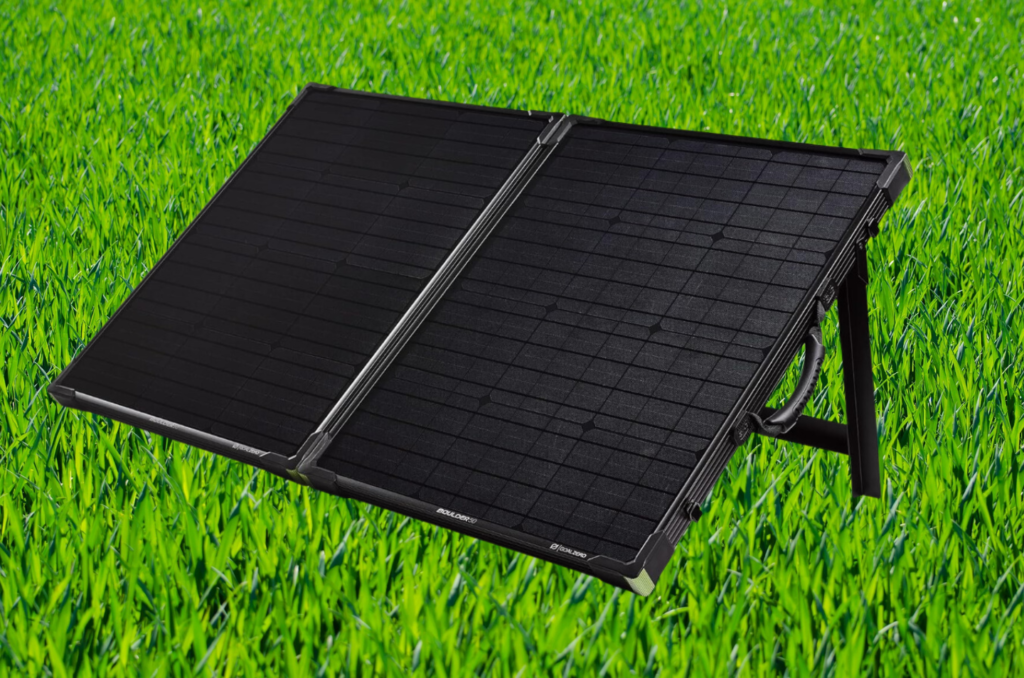
The Goal Zero Boulder 100 Briefcase Solar Panel is a robust, foldable, and highly durable solar panel designed for outdoor adventurers, RV users, and those needing a reliable, off-grid solar solution. Known for its rugged design, this solar panel is built to withstand tough conditions while delivering a steady supply of solar power to portable power stations or smaller devices. It stands out among the best solar panels for camping its durability and portability, making it an excellent choice for long-term outdoor use.
Product Specifications:
- Wattage: 100W
- Weight: 25.9 lbs (11.7 kg)
- Dimensions (unfolded): 40 x 26.75 x 1.75 inches
- Dimensions (folded): 21.75 x 26.75 x 3.75 inches
- Material: Tempered glass and aluminum frame
- Efficiency: ~18%
- Connector: 8mm cable (compatible with Goal Zero Yeti power stations and other compatible solar generators)
- Waterproof Rating: Weatherproof (can withstand rain and snow)
- Warranty: 24-month warranty
Direct and Indirect Solar Charging Speed
In full, direct sunlight, the Goal Zero Boulder 100 can generate close to its full 100W capacity, making it ideal for keeping solar generators and smaller devices charged throughout the day. This efficiency is reduced in indirect sunlight, where it typically produces around 40-60W, depending on cloud cover and shading.
While it may not be as powerful as larger or more efficient panels, its build quality ensures that it can continue functioning in tough environments, whether it’s cloudy, raining, or even snowing.
Functionality and Usability
The Boulder 100 Briefcase is designed with portability and outdoor durability in mind. Its foldable design and sturdy aluminum frame make it easy to transport and store when not in use. The tempered glass panels offer added durability, making it a great option for extended camping trips, RV living, or any situation where the panel may face exposure to the elements.
This panel comes with an 8mm connector, which is compatible with the Goal Zero Yeti power stations, but can also be used with other solar generators through an adapter. The built-in kickstands allow users to set the panel at an optimal angle for maximum sun exposure, helping to improve charging efficiency.
Pros:
- Durable Design: Built with an aluminum frame and tempered glass, the Boulder 100 is highly durable and weatherproof.
- Portability: Foldable design with a convenient carrying case makes it easy to transport.
- Multiple Uses: Works well with both Goal Zero Yeti power stations and other compatible solar generators.
- Weatherproof: Designed to withstand rain, snow, and harsh outdoor conditions, making it a great choice for long-term outdoor use.
- Kickstands for Optimal Positioning: Built-in kickstands allow for better sun exposure and charging efficiency.
Cons:
- Heavier Than Some Alternatives: Weighing nearly 26 lbs, it is one of the heavier 100W portable solar panels available.
- Lower Efficiency: At around 18% efficiency, it’s not as efficient as other higher-end solar panels, which can be a downside in low-light conditions.
- Limited Power Output: 100W output is lower than some more powerful panels, meaning it will take longer to charge larger solar generators or devices.
Charging Performance
- Direct Sunlight Charging Speed: The Goal Zero Boulder 100 performs well in full sun, delivering close to 100W of power, making it a reliable option for outdoor use.
- Indirect Sunlight Charging Speed: In indirect sunlight, the panel’s output drops to 40-60W, which is still usable but may slow down charging for larger devices or solar generators.
Additional Features
While the Boulder 100 lacks advanced features like Bluetooth or Wi-Fi connectivity, its simplicity makes it a dependable workhorse in tough environments. Its rugged construction ensures that it can handle the wear and tear of outdoor adventures without the need for constant maintenance.
Pros and Cons Summary
| Goal Zero Boulder 100 Briefcase Solar Panel | Pros | Cons |
|---|---|---|
| Durable Build | Rugged design with tempered glass and aluminum frame. | Heavier than many other 100W solar panels. |
| Portability | Foldable design with a handle for easy transport. | Lower efficiency compared to some newer panels. |
| Weatherproof | Can withstand rain, snow, and harsh conditions. | 100W power output may be low for some high-demand devices. |
| Multiple Uses | Works with Goal Zero Yeti power stations and other generators. | |
| Stability | Kickstands ensure optimal positioning for solar capture. |
Conclusion
The Goal Zero Boulder 100 Briefcase Solar Panel is a reliable, durable, and highly portable solar panel option for campers, RV users, and anyone needing consistent off-grid power. Its sturdy build and weatherproofing make it ideal for extended outdoor use, and while it may not have the highest efficiency or power output, its rugged design more than makes up for these limitations.
For those who prioritize durability and reliability over maximum power output, the Boulder 100 offers peace of mind in outdoor settings, ensuring that you’ll have a consistent energy source in tough environments. Whether you’re charging a solar generator for camping or maintaining power during extended off-grid adventures, this solar panel will keep you powered in any weather.
6. ALLPOWERS 100W Foldable Solar Panel: Great for Multi-Device Charging
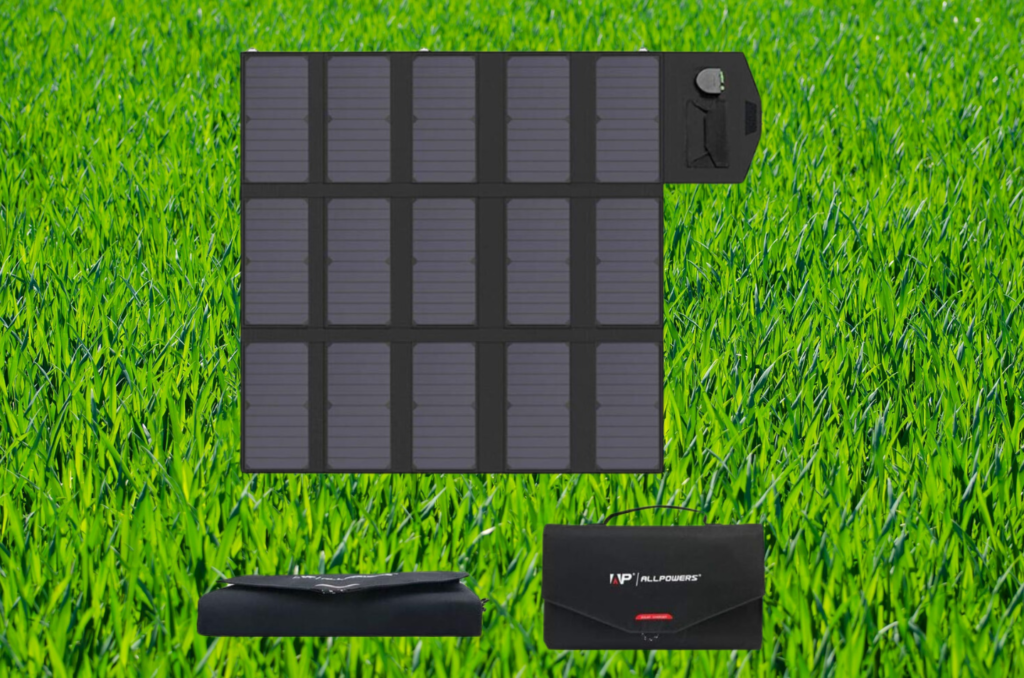
The ALLPOWERS 100W Foldable Solar Panel is designed to provide flexible, efficient charging for a variety of devices. It’s an excellent option for outdoor enthusiasts, RV travelers, and anyone who needs portable solar power on the go. This panel stands out due to its lightweight, foldable design and ability to charge multiple devices simultaneously. It’s also compatible with many solar generators, making it a versatile and valuable addition to your gear.
Product Specifications:
- Wattage: 100W
- Weight: 4.41 lbs (2 kg)
- Dimensions (unfolded): 36.5 x 20.7 x 0.2 inches
- Dimensions (folded): 12.8 x 7.5 x 3.2 inches
- Efficiency: ~23.5%
- Ports:
- USB-A Output: 5V/2.4A
- USB-C Output: 5V/3A
- DC Output: 18V/5A
- MC-4 Output: 25A (for solar generators)
- Material: Durable waterproof and dustproof polyester fabric
- Solar Panel Type: Monocrystalline
- Warranty: 18-month warranty
Energy Generated in 1 Hour
- Direct Sunlight: Under perfect sunlight conditions, the panel can generate close to 100 watt-hours in one hour, which is sufficient for charging small electronics like phones, tablets, or even providing a significant boost to a solar generator.
- Indirect Sunlight: In indirect or cloudy conditions, the panel generates around 40-60 watt-hours in an hour, depending on the light intensity. This may slow down the charging process for larger devices but still provides decent output for smaller devices.
Functionality and Usability
The ALLPOWERS 100W Foldable Solar Panel is designed with portability and flexibility in mind. Its foldable structure and lightweight build make it incredibly easy to carry, store, and deploy in any outdoor setting. The variety of output ports, including USB, USB-C, and DC, enables you to charge multiple devices at once. Whether you’re powering a portable generator, charging your phone, or running a laptop, this solar panel offers excellent multi-device functionality.
It comes with an 18V DC output for larger solar generators and also features an MC-4 cable to ensure compatibility with several high-capacity power stations. This makes it ideal for users who need to charge various devices while camping or during outdoor activities.
Pros:
- Lightweight and Foldable: Extremely easy to carry, weighing just over 4 lbs, and folds down compactly for transport.
- High Efficiency: With a conversion efficiency of 23.5%, it captures more energy from sunlight compared to many competitors.
- Multiple Ports for Charging: Features USB, USB-C, and DC outputs, allowing you to charge multiple devices simultaneously, including phones, tablets, and solar generators.
- Weatherproof: The panel is water and dust-resistant, making it suitable for outdoor environments.
- Wide Compatibility: Works with many portable solar generators, including those from ALLPOWERS, Jackery, and Goal Zero.
Cons:
- Limited Power for Larger Devices: While excellent for small electronics, its 100W output may be insufficient for large power stations or devices requiring substantial energy.
- Performance Drops in Low Light: Like most solar panels, its output decreases significantly in cloudy or shaded conditions.
- Lack of Kickstand: Unlike some competitors, it doesn’t have a built-in kickstand for easier angling toward the sun.
Charging Performance
- Direct Sunlight Charging Speed: The ALLPOWERS 100W performs well in direct sunlight, offering close to 100W of output. This makes it a reliable panel for charging solar generators, laptops, phones, and more in outdoor settings.
- Indirect Sunlight Charging Speed: In indirect sunlight, performance drops, providing approximately 40-60W, which is still sufficient for smaller devices but may slow down the charging of larger solar generators.
Additional Features
The ALLPOWERS 100W Foldable Solar Panel doesn’t have advanced features like Bluetooth or Wi-Fi. However, its multiple output ports and ability to charge several devices at once add a layer of convenience and flexibility. Its lightweight and durable design make it a perfect choice for outdoor enthusiasts looking for a portable and reliable solar panel for camping, RVing, or remote work.
Pros and Cons Summary
| ALLPOWERS 100W Foldable Solar Panel | Pros | Cons |
|---|---|---|
| Lightweight and Portable | Compact and easy to transport at just over 4 lbs. | Limited output for larger devices. |
| High Efficiency | Converts sunlight to power at ~23.5% efficiency. | Output reduces significantly in low-light conditions. |
| Multi-Device Charging | USB, USB-C, and DC ports for charging multiple devices. | Lacks a kickstand for optimal sun positioning. |
| Durable and Weatherproof | Water and dustproof, ideal for outdoor use. | |
| Wide Compatibility | Compatible with various solar generators and devices. |
Conclusion
The ALLPOWERS 100W Foldable Solar Panel is an excellent choice for those who need a lightweight, portable, and efficient solar panel to charge multiple devices. Its foldable design, combined with its high-efficiency monocrystalline panels, makes it a versatile option for campers, hikers, RV owners, and anyone spending extended periods outdoors. Whether you’re looking to keep your devices charged while camping or need a reliable source of off-grid power for your RV, the ALLPOWERS 100W has you covered.
While its 100W capacity may not be sufficient for larger solar generators or power-hungry devices, its multi-device charging capabilities and wide compatibility make it a standout option in the portable solar panel market.
7. Togo Power 120W Solar Panel: Affordable and Reliable
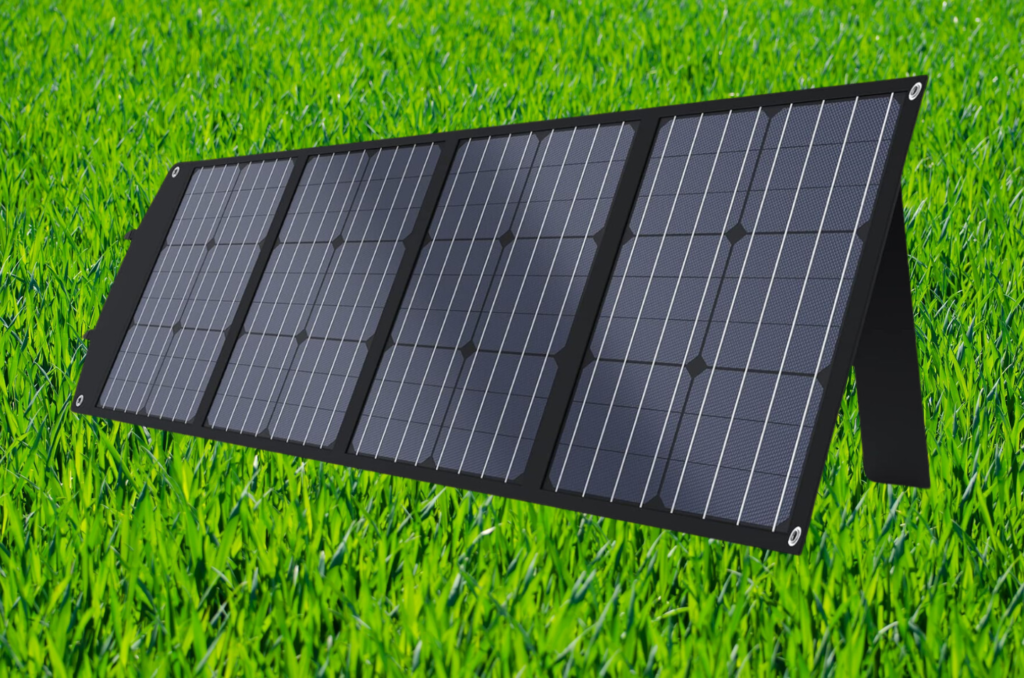
The Togo Power 120W Solar Panel offers an affordable and efficient solution for campers, RV owners, and those seeking a reliable off-grid power source. It provides sufficient wattage for a range of devices and is compatible with many solar generators, making it a popular option among outdoor enthusiasts. Its foldable design and relatively lightweight frame allow for easy transport and storage, while the monocrystalline panels ensure reliable energy output.
Product Specifications:
- Wattage: 120W
- Weight: 10.25 lbs (4.65 kg)
- Dimensions (unfolded): 67.7 x 20.07 x 1.18 inches
- Dimensions (folded): 20.07 x 14.57 x 2.36 inches
- Efficiency: ~21%
- Ports:
- USB-A Output: 5V/2.4A
- USB-C Output: 5V/3A
- DC Output: 18V/6.67A
- Anderson Output: 12V/10A (for solar generators)
- Material: High-quality waterproof and durable fabric
- Solar Panel Type: Monocrystalline
- Warranty: 24-month warranty
Energy Generated in 1 Hour
- Direct Sunlight: The Togo Power 120W Solar Panel can generate approximately 120 watt-hours of energy in 1 hour of direct sunlight, which is enough to power small electronics or provide a decent boost to a portable power station.
- Indirect Sunlight: Under indirect sunlight, it produces around 50-70 watt-hours per hour, which is suitable for trickle charging or maintaining power to low-energy devices like phones or flashlights.
Functionality and Usability
The Togo Power 120W Solar Panel excels in portability and ease of use. Its foldable design makes it compact, and the attached handles and lightweight frame mean it’s easy to transport on camping trips, hiking adventures, or for RV use. The multiple output options, including USB, USB-C, and DC, allow you to charge a variety of devices directly from the panel without the need for a separate power station.
This solar panel is particularly useful for campers or those living off-grid temporarily. Its Anderson output ensures compatibility with larger solar generators, allowing for a seamless setup when additional power storage is required.
Pros:
- Affordable: Competitively priced, offering excellent value for a 120W panel.
- Lightweight and Foldable: At just over 10 lbs, it’s relatively lightweight and easy to carry.
- Versatile Charging Ports: Multiple output options, including USB, USB-C, DC, and Anderson, to support a range of devices.
- Weather-Resistant: The panel is made from durable and water-resistant material, making it ideal for outdoor use.
- Good Energy Efficiency: With a 21% conversion efficiency, it offers reliable power even in less-than-ideal sunlight conditions.
Cons:
- Heavier than Smaller Panels: Although portable, it’s a bit heavier compared to 100W panels.
- Performance Drops in Low Light: Like most solar panels, efficiency drops significantly in cloudy or shaded conditions.
- No Kickstand for Angle Adjustment: The lack of a built-in kickstand makes it difficult to position optimally for maximum sun exposure.
Charging Performance
- Direct Sunlight Charging Speed: Under optimal sunlight conditions, the Togo Power 120W delivers its full 120W output, which can charge a small solar generator or a laptop efficiently in a few hours.
- Indirect Sunlight Charging Speed: In cloudy or shaded conditions, the output reduces to approximately 50-70W. This decrease makes charging larger devices slower, but it’s still sufficient for keeping smaller electronics powered.
Additional Features
While the Togo Power 120W Solar Panel doesn’t have advanced features like Bluetooth or Wi-Fi connectivity, its simplicity is part of its appeal. The multiple ports allow for direct charging of devices, making it a flexible option for those who may not want to carry a separate solar generator.
Pros and Cons Summary
| Togo Power 120W Solar Panel | Pros | Cons |
|---|---|---|
| Affordable Price | Offers excellent value for a 120W panel. | Heavier compared to some 100W options. |
| Versatile Charging Ports | USB, USB-C, DC, and Anderson outputs support multiple devices. | Performance drops significantly in low-light conditions. |
| Weather-Resistant and Durable | Made from high-quality, water-resistant fabric for outdoor use. | Lacks a kickstand for optimal sun positioning. |
| Good Energy Efficiency | High 21% conversion efficiency. |
Conclusion
The Togo Power 120W Solar Panel is a solid choice for anyone seeking a balance of affordability, reliability, and portability. Its lightweight design and foldable structure make it perfect for outdoor activities such as camping, RVing, or hiking, while its multiple output options allow for charging a variety of devices directly from the panel. Despite lacking a built-in kickstand for easier positioning, it remains a dependable option for those looking for an affordable yet efficient solar panel.
Whether you’re looking to maintain a steady power supply for your devices during outdoor trips or need a portable energy source for emergency situations, the Togo Power 120W offers excellent value for its price. With its weather-resistant construction and decent performance in both direct and indirect sunlight, it provides a reliable power source wherever you need it most.
8. Zamp Solar 140W Portable Kit: Reliable and Made in the USA
The Zamp Solar 140W Portable Kit is a highly reliable solar panel system designed for outdoor enthusiasts, RV owners, and anyone in need of portable, renewable energy. Made in the USA, Zamp Solar is known for its high-quality construction and durable products, with this model being a top choice for those who prioritize reliability and ease of use. The 140W panel kit offers plenty of power for recharging solar generators, batteries, and running small appliances, all while being compact enough to take on the road.
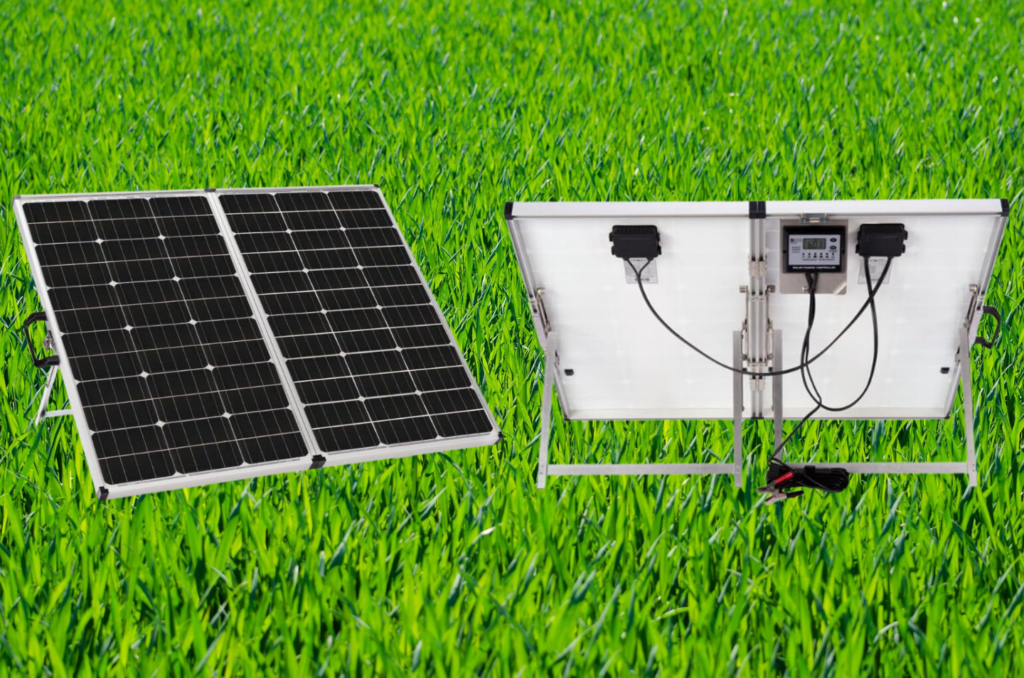
Product Specifications:
- Wattage: 140W
- Weight: 29 lbs (13.2 kg)
- Dimensions (unfolded): 39.5 x 21.5 x 1.5 inches
- Dimensions (folded): 39.5 x 21.5 x 3.1 inches
- Efficiency: ~19%
- Material: Tempered glass, anodized aluminum frame
- Charge Controller: 10A PWM charge controller included
- Cable Length: 15 feet
- Ports: SAE connector (compatible with most RVs)
- Warranty: 25-year output warranty on solar cells, 5-year workmanship warranty
- Solar Panel Type: Monocrystalline
- Included Accessories: Alligator clips, quick-connect adapters, and carrying case
Direct and Indirect Solar Charging Speed
The Zamp Solar 140W Portable Kit delivers up to 140W of power in optimal conditions. When exposed to direct sunlight, this panel can charge a 100Ah battery from 50% to full in around 4-5 hours. For smaller solar generators, it can provide a steady charge and top them up within a day of full sun exposure.
Under indirect sunlight, as with most solar panels, the performance decreases, with the Zamp 140W panel delivering about 70-90W. However, the integrated charge controller helps optimize the charging process even in variable conditions, ensuring stable output even on cloudy days.
Functionality and Usability
This portable kit is designed to be user-friendly, offering simple plug-and-play functionality. It’s compatible with a wide range of solar generators, RV systems, and 12V batteries. The included 10A PWM charge controller ensures safe charging, protecting against overcharging, reverse polarity, and short circuits. The panel comes pre-wired, meaning users can start generating power right out of the box.
One standout feature of the Zamp Solar 140W Portable Kit is its durability. Constructed with tempered glass and an anodized aluminum frame, it’s built to withstand harsh outdoor conditions. The 15-foot extension cable also allows for flexible panel placement, so you can position it for maximum sun exposure while keeping your generator or battery in the shade.
Pros:
- High Build Quality: Made in the USA with durable materials, ensuring long-lasting performance.
- Easy to Use: Pre-wired for plug-and-play use with RVs and solar generators.
- Included Charge Controller: The integrated 10A PWM charge controller prevents overcharging and ensures safe operation.
- Good Performance in Low Light: Performs decently under cloudy or shaded conditions, producing 70-90W.
- Long Cables for Flexibility: The 15-foot cable allows for easy placement and optimal sun exposure.
Cons:
- Heavier Than Other Portable Panels: Weighing 29 lbs, it’s not the lightest option for frequent travelers or hikers.
- Bulkier Design: The folded dimensions are larger than some other foldable solar panels, making it less convenient to store.
- Higher Price Point: As a premium product made in the USA, it comes with a higher price tag compared to other options.
Charging Performance
- Direct Sunlight Charging Speed: In full sun, the Zamp Solar 140W Portable Kit can charge a 100Ah 12V battery from 50% to full in 4-5 hours. It’s also compatible with most solar generators, delivering up to 140W of power for steady, reliable charging.
- Indirect Sunlight Charging Speed: In cloudy conditions or partial shade, the panel still manages to produce 70-90W of power, which is impressive for a portable kit. This makes it a reliable option even in variable weather.
Additional Features
One of the unique features of the Zamp Solar 140W is the integrated charge controller, which not only prevents overcharging but also monitors the panel’s performance. The solar kit also has a built-in kickstand that helps position the panel at the optimal angle for capturing sunlight. Unlike many other panels, the Zamp Solar 140W Kit is made specifically for RV owners and comes pre-wired for easy integration with existing RV solar systems.
Bluetooth or Wi-Fi Connectivity
Although the Zamp Solar 140W Portable Kit doesn’t have Bluetooth or Wi-Fi connectivity, the included charge controller does provide essential performance data like voltage and current. For users who prioritize remote monitoring or digital integration, this panel might seem a bit basic, but its simplicity also makes it more user-friendly and less prone to technical issues.
Pros and Cons Summary
| Zamp Solar 140W Portable Kit | Pros | Cons |
|---|---|---|
| Durable Construction | Tempered glass and aluminum frame make it highly durable. | Bulkier and heavier than other portable panels. |
| Plug-and-Play Functionality | Easy to use, especially with RVs and 12V batteries. | Higher price point compared to other portable solar panels. |
| Includes Charge Controller | Protects devices from overcharging and optimizes performance. | No Bluetooth or Wi-Fi connectivity for remote monitoring. |
| Good Low-Light Performance | Performs decently in indirect sunlight. |
Conclusion
The Zamp Solar 140W Portable Kit is an excellent choice for RV owners, outdoor enthusiasts, and off-grid users who prioritize reliability and high-quality construction. With durable materials and simple plug-and-play functionality, it’s one of the most user-friendly options available. Though heavier and bulkier than some other portable kits, the trade-off in size is justified by the panel’s performance and longevity.
In direct sunlight, it provides a robust 140W output, making it capable of charging solar generators and 12V batteries efficiently. Even in cloudy conditions, its performance doesn’t drop off drastically, maintaining a 70-90W output. For users who want a reliable, well-built solar kit that’s made in the USA, the Zamp Solar 140W Portable Kit is a fantastic investment for long-term use.
9. DOKIO 160W Foldable Solar Panel: Compact and Budget-Friendly
The DOKIO 160W Foldable Solar Panel is a great choice for those who want an affordable and portable solar solution without compromising on performance. Known for its lightweight design and efficient output, the DOKIO 160W panel is perfect for campers, RV owners, and outdoor enthusiasts looking for a budget-friendly solar option. Despite being priced lower than many competitors, it still delivers a solid performance, making it one of the best foldable solar panels in its price range.
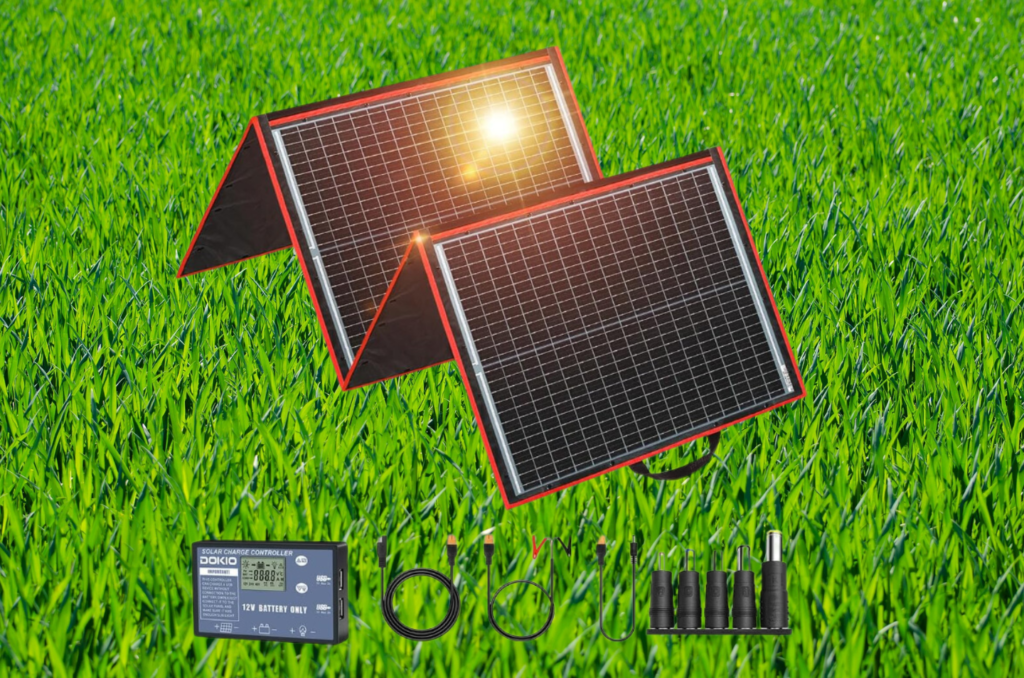
Product Specifications:
- Wattage: 160W
- Weight: 9 lbs (4.1 kg)
- Dimensions (unfolded): 32.5 x 22 x 0.9 inches
- Dimensions (folded): 21 x 22 inches
- Efficiency: ~23%
- Material: ETFE laminate, polyester canvas exterior
- Output Ports: 18V DC, 2 USB ports (5V/2.1A each)
- Cable Length: 9.8 feet
- Solar Panel Type: Monocrystalline
- Included Accessories: Carrying case, DC adapters, alligator clips
- Warranty: 1-year limited warranty
Direct and Indirect Solar Charging Speed
The DOKIO 160W Foldable Solar Panel performs impressively in direct sunlight, producing up to 160W of power, which is enough to charge a typical portable solar generator or 12V battery in just a few hours. Thanks to its efficient monocrystalline cells, it delivers a higher wattage than many other budget solar panels.
In indirect sunlight, the DOKIO 160W performs at about 50-70% efficiency, generating around 80-110W, depending on the weather conditions. While not as powerful as it is in direct sun, the output is still reliable enough for topping off a solar generator or maintaining battery levels throughout the day.
Functionality and Usability
The DOKIO 160W is known for its user-friendly, foldable design, which makes it highly portable. Weighing just 9 pounds, it’s one of the lightest panels in its class, making it ideal for hikers, campers, and RVers. It folds up compactly into a briefcase-style carrying case, making it easy to transport and set up anywhere.
This solar panel is equipped with an 18V DC output and two USB ports, allowing you to charge both larger devices (like solar generators) and smaller electronics (like phones or tablets) simultaneously. The included alligator clips and DC adapters make it compatible with a wide range of devices, and the 9.8-foot cable gives you flexibility in placing the panel in optimal sunlight while keeping your generator or devices in the shade.
Pros:
- Lightweight and Portable: At only 9 lbs, it’s easy to carry and transport, making it perfect for outdoor adventures.
- High Efficiency: With an efficiency rating of around 23%, it performs better than many other budget-friendly options.
- Versatile Charging Options: Features both DC and USB outputs for charging multiple devices simultaneously.
- Affordable: One of the most budget-friendly 160W solar panels on the market, offering great value for its price.
- Easy to Set Up: Simple plug-and-play design makes it user-friendly for beginners.
Cons:
- Limited Durability: While it’s lightweight, the materials used aren’t as rugged as some other solar panels, so it may not withstand harsh conditions as well.
- Shorter Cable Length: The included 9.8-foot cable might limit where you can position the panel for optimal sunlight.
- No Built-in Charge Controller: Unlike more expensive options, this model doesn’t come with a charge controller, so you’ll need to purchase one separately if charging a 12V battery.
Charging Performance
- Direct Sunlight Charging Speed: Under full sun, the DOKIO 160W Foldable Solar Panel can charge a 100Ah battery from 50% to full in about 6-8 hours. For smaller solar generators, it can provide a steady stream of power and top them off within a few hours.
- Indirect Sunlight Charging Speed: In cloudy or partial sun conditions, the panel’s output drops to about 80-110W, meaning it will take longer to charge a generator or battery. However, the panel still performs admirably for a budget option, ensuring a stable charge throughout the day.
Additional Features
One of the key selling points of the DOKIO 160W Foldable Solar Panel is its lightweight and portable design. Its compact foldability makes it easy to store in tight spaces, whether in a vehicle, RV, or camping gear. It comes with a variety of adapters to ensure compatibility with different devices, and the USB ports allow for direct charging of smartphones, tablets, or other smaller gadgets.
However, one drawback is the lack of a built-in charge controller, which means users will need to invest in a separate controller if they plan to use the panel with 12V batteries or other sensitive electronics. Despite this, the DOKIO 160W is a fantastic choice for those who want to dip their toes into solar power without breaking the bank.
Bluetooth or Wi-Fi Connectivity
While the DOKIO 160W Foldable Solar Panel does not come equipped with Bluetooth or Wi-Fi features, its simple and straightforward design makes it highly user-friendly. For users seeking remote monitoring or integration with smart devices, this panel may not have the features they need. However, its affordability and portability more than compensate for the lack of digital connectivity.
Pros and Cons Summary
| DOKIO 160W Foldable Solar Panel | Pros | Cons |
|---|---|---|
| Lightweight Design | At 9 lbs, it’s easy to carry, store, and transport. | Not as rugged or durable as more expensive models. |
| Great Efficiency | ~23% efficiency for its price range, good in various conditions. | Lacks a built-in charge controller for 12V battery protection. |
| Affordable | Offers great value for a 160W panel at a budget-friendly price. | Shorter cable length compared to other panels in its class. |
| Versatile Charging Options | USB ports for direct charging of smaller devices. | No Bluetooth or Wi-Fi for advanced monitoring. |
Conclusion
The DOKIO 160W Foldable Solar Panel is one of the best budget-friendly solar panels on the market. Its lightweight, foldable design makes it highly portable, while its efficient monocrystalline cells ensure good performance even in variable conditions. Though it lacks the durability and features of higher-end models, such as a built-in charge controller or smart connectivity, it offers excellent value for money.
In direct sunlight, this panel is capable of generating up to 160 watt-hours per hour, providing sufficient power to charge a variety of solar generators or 12V batteries. Even in indirect sunlight, it performs admirably, producing up to 110 watt-hours, which is still enough to top off smaller devices throughout the day. For those who are just starting out with solar power or need an affordable option for outdoor adventures, the DOKIO 160W Foldable Solar Panel is a fantastic choice.
Comparison Table: Best Solar Panels for Camping, RV, and Outdoor Living
| Solar Panel | Wattage (W) | Weight (lbs) | Efficiency (%) | Price Range |
|---|---|---|---|---|
| Jackery SolarSaga 100W | 100W | 9.1 | 23% | Chick Here for Updated Price |
| Renogy 100W Monocrystalline | 100W | 16.5 | 22% | Click Here for Updated Price |
| EcoFlow 160W Portable | 160W | 15.4 | 21% | Click Here for Updated Price |
| Bluetti PV200 200W | 200W | 16.1 | 23.4% | Click Here for Updated Price |
| Goal Zero Boulder 100 | 100W | 20.1 | 18-20% | Click Here for Updated Price |
| ALLPOWERS 100W Foldable | 100W | 4.4 | 23.5% | Click Here for Updated Price |
| Togo Power 120W | 120W | 8.5 | 20% | Click Here for Updated Price |
| Zamp Solar 140W Portable Kit | 140W | 26.2 | 19% | Click Here for Updated Price |
| DOKIO 160W Foldable | 160W | 9.0 | 19-21% | Click Here for Updated Price |
Capacity (Wh): Powering Your Adventure
One of the first things to consider when choosing the best solar panels for camping and your outdoor trips is its capacity in watt-hours (Wh). The capacity determines how much energy the panel can store and supply to your devices. For example, a 100W solar panel is great for charging small devices like smartphones, while larger panels in the 160W to 200W range can keep laptops, fridges, and lights running for longer periods.
When talking about solar panels, the capacity is one of the most important factors to understand. Capacity, typically measured in watt-hours (Wh), represents how much energy a solar panel can generate or store over time. Knowing a panel’s capacity will help users decide if it can meet their power needs, whether for camping, RV trips, or residential use. Let’s break down how to measure capacity, calculate it, and what to look for when buying the best solar panels for camping, RV or off-grid living.
What is Capacity (Wh) and Why Does It Matter?
Capacity refers to the total amount of energy a solar panel can produce under optimal conditions. It’s a measure of how many watt-hours (Wh) of electricity the panel will generate over a certain time period, typically an hour. The higher the Wh capacity, the more energy the panel can generate, making it crucial for applications requiring a consistent power supply, such as powering camping appliances or RVs.
For instance, if a solar panel has a capacity of 100 watt-hours, it can produce 100 watts of power for one hour, or 50 watts for two hours, depending on the amount of sunlight available.
How Capacity (Wh) is Calculated
To calculate the capacity (Wh) of a solar panel, you need two key pieces of information:
- Wattage (W) of the solar panel (the amount of power it can generate under peak sunlight).
- Hours of sunlight the panel receives.
Here’s the simple formula:
Capacity (Wh) = Wattage (W) × Hours of sunlight
For example, if you have a 100W solar panel and it receives 5 hours of direct sunlight, the capacity will be:
100W × 5 hours = 500Wh
This means the panel can generate 500 watt-hours of electricity that day, which you can use to charge devices, store in a battery, or power appliances.
How to Check the Capacity of Solar Panels
Manufacturers usually specify the capacity of their solar panels in the product specifications. To ensure a solar panel meets your energy needs, check the following:
- Wattage (W): The maximum output a solar panel can generate under ideal sunlight conditions. The higher the wattage, the more electricity the panel can produce.
- Voltage (V): The electrical potential difference or “pressure” that drives the current. Most solar panels used for portable power are rated at 12V or 24V.
- Amperage (A): The amount of electric current produced by the panel.
With these details, you can calculate the overall capacity using the formula mentioned above.
Capacity vs. Efficiency
While capacity measures the total energy a solar panel can generate, efficiency determines how well a panel converts sunlight into usable electricity. Two panels can have the same wattage but different efficiencies based on the quality of their photovoltaic cells. Higher efficiency means you’ll get more energy from the same size panel, but it doesn’t necessarily increase the capacity (Wh).
Factors That Affect Solar Panel Capacity
Several factors influence the actual capacity or energy output of a solar panel in real-world conditions:
- Sunlight Intensity: Solar panels need direct sunlight to perform at maximum capacity. Cloud cover, shade, or indirect sunlight can reduce the output.
- Angle and Orientation: Panels need to be properly angled and oriented toward the sun for maximum energy generation.
- Temperature: While it may seem counterintuitive, solar panels perform better in cooler temperatures. Excess heat can reduce a panel’s efficiency, affecting overall capacity.
- Panel Type: Monocrystalline panels are generally more efficient and produce more power in low-light conditions compared to polycrystalline or thin-film panels.
How Panel Capacity Relates to Solar Battery Storage
If you plan to store the energy produced by your solar panels, understanding capacity (Wh) is crucial. The total capacity of your panels should be enough to charge your battery system within a day of sunlight. For example, if your battery holds 600Wh and your solar panel can generate 100Wh per hour, it will take 6 hours of sunlight to fully charge the battery.
When choosing a battery, you should also check that its capacity (Wh) aligns with your solar panel output. If the battery’s capacity exceeds what your panel can produce in a day, you won’t be using the system efficiently.
How Many Panels Do You Need Based on Capacity?
Determining how many panels you need depends on the total energy demand of the devices you intend to power. Here’s a quick way to calculate:
- Total energy demand: Estimate how many watt-hours you need per day (for example, running a fridge, lights, and phone chargers).
- Available sunlight: Check how many hours of sunlight you typically get in your location.
- Panel capacity: Divide the total daily energy demand by the panel’s wattage and sunlight hours to find how many panels you’ll need.
For example:
- You need 1000Wh/day of energy.
- You receive 5 hours of sunlight daily.
- Your panel has a 100W capacity.
Calculation:
1000Wh ÷ (100W × 5 hours) = 2 panels needed
This means you’ll need two 100W panels to meet your energy demand under these conditions.
Panel Capacity and Solar Generator Compatibility
Another key factor in choosing a solar generator or battery to pair with your solar panels is ensuring the generator’s input can handle the capacity of the panel. Some solar generators have a maximum input rating, meaning they can only accept a certain amount of power per hour. If your solar panel’s capacity exceeds this, the generator won’t be able to charge efficiently.
For example, if your solar generator can only handle 200 watts of input at a time, pairing it with multiple 100W panels would be ideal. However, pairing it with a 400W panel would result in wasted energy since the generator can’t absorb more than 200W.
Conclusion: Choosing Solar Panels Based on Capacity
Understanding the capacity (Wh) of a solar panel is essential to ensure it meets your energy needs, whether for camping, RVing, or home backup power. By calculating the panel’s output, accounting for real-world factors like sunlight hours and temperature, and pairing it with a compatible battery or generator, you can optimize your solar setup.
When choosing a solar generator or panel, always consider your daily power needs, the capacity (Wh) required to meet those needs, and the total number of panels you may need for optimal performance.
Power Output (Watt): Consistent and Reliable Power
When you’re off-grid, having a reliable power source is crucial. Panels like the EcoFlow 160W or Bluetti PV200 provide a higher wattage, meaning they can charge larger devices faster. However, smaller panels like the Jackery SolarSaga 100W are easier to transport and work best for quick weekend getaways.
Battery Charging Speed: Fast Energy On-the-Go
Whether you’re camping or living in your RV, you’ll want your devices charged quickly. Look for panels with higher charging efficiencies like the Bluetti PV200, which can charge compatible devices faster, even in moderate sunlight.
One of the most important aspects of any solar power system is the battery charging speed. When considering how long it takes to recharge a battery, it’s essential to understand the factors that influence charging speed, how to calculate it, and what to look for when evaluating a solar power generator or solar panels system. Let’s explore the ins and outs of battery charging speed, how it’s calculated, and how to check if it fits your power needs.
What is Battery Charging Speed and Why Does It Matter?
Battery charging speed refers to the time it takes for a solar power system to fully recharge its battery from empty to full. This factor is crucial because it directly affects how quickly you can restore your energy supply, especially in off-grid situations where power reliability is critical—such as in camping, RVing, or during power outages.
The faster the charging speed, the quicker your solar battery will be ready to supply power. A slow charging speed could leave you without power for an extended period, while a fast charging time ensures consistent energy availability.
How is Battery Charging Speed Calculated?
To calculate battery charging speed, you need two key pieces of information:
- Battery capacity (in watt-hours or Wh): This is the amount of energy the battery can hold.
- Solar panel output (in watts or W): This is the amount of power the panel can produce under ideal conditions.
Here’s the basic formula:
Charging Time (hours) = Battery Capacity (Wh) ÷ Solar Panel Output (W)
For example, if you have a 500Wh battery and a 100W solar panel, it will take:
500Wh ÷ 100W = 5 hours
This means that under ideal sunlight conditions, the panel would fully recharge the battery in 5 hours.
Factors Affecting Battery Charging Speed
While the calculation seems simple, several factors influence battery charging speed in real-world conditions:
- Sunlight Intensity: Solar panels produce their maximum output under direct, full sunlight. Cloud cover, shadows, or indirect sunlight reduce the panel’s wattage, extending the charging time.
- Panel Efficiency: Higher-efficiency panels can generate more electricity in less sunlight, reducing charging time.
- Battery Size: Larger batteries take longer to charge. A 1000Wh battery paired with a 100W solar panel, for example, will take 10 hours to charge, compared to the 5 hours required by a 500Wh battery.
- Panel and Battery Compatibility: If the battery’s input limit is lower than the panel’s output, charging speed will be bottlenecked. For instance, if a battery can only accept 100W of input but the panel produces 200W, the charging time will be calculated based on the 100W input limit.
- Temperature: Cold or very hot weather can slow down the chemical reactions inside a battery, resulting in slower charging times.
How to Check Battery Charging Speed
Manufacturers typically specify the battery charging speed in the product details. To determine how fast your solar power system charges, you can:
- Check the Battery Capacity: This is usually listed in watt-hours (Wh) or amp-hours (Ah). A larger capacity battery will take longer to charge.
- Check the Solar Panel’s Output: The wattage (W) of the solar panel tells you how much power it generates under ideal conditions. A higher-wattage panel will charge the battery faster.
- Look for Charging Time Estimates: Many manufacturers provide an estimate of how long it takes to charge their batteries using solar panels. This is a good way to quickly understand the system’s performance in typical conditions.
For example, a 500Wh battery paired with a 100W panel may list a charging time of 5–7 hours, accounting for variations in sunlight.
Direct vs. Indirect Sunlight Charging Speed
Solar panels perform best under direct sunlight—when the sun’s rays hit the panel at a perpendicular angle. However, conditions are not always ideal, and indirect sunlight (such as when the sun is low in the sky or when there’s cloud cover) can reduce the amount of energy produced.
- Direct Sunlight: A 100W solar panel will produce its maximum output in direct sunlight, charging the battery as fast as possible. For example, a 500Wh battery with a 100W panel could charge in about 5 hours under perfect conditions.
- Indirect Sunlight: When solar panels receive indirect sunlight, their efficiency drops, reducing the charging speed. In this case, a 100W panel may only produce 50W of power, meaning the same 500Wh battery will take closer to 10 hours to charge.
Battery Charging Speeds with Multiple Panels
Adding more panels to your setup can significantly reduce charging time. If your solar generator allows it, connecting multiple panels can double or even triple the energy input, slashing charging time.
For example, if you use two 100W panels instead of one, the calculation changes as follows:
500Wh ÷ (100W × 2) = 2.5 hours
This setup would charge the battery in 2.5 hours under ideal sunlight conditions.
Battery Input and Charging Speeds
Solar power systems often specify the maximum input they can handle, limiting the charging speed even if you have powerful solar panels. For example, if a battery has a maximum input of 300W but you have three 200W panels (for a total of 600W), the system will only accept 300W of power, and the excess energy will go unused.
Ensure that the battery and solar panels you purchase are compatible in terms of input and output to optimize charging speed.
How to Optimize Charging Speed
To make the most of your solar generator’s battery charging speed, here are some tips:
- Positioning: Place your panels in direct sunlight, with no shadows, at the best angle to maximize sun exposure.
- Panel Efficiency: Use high-efficiency panels to generate more energy in the same conditions.
- Multiple Panels: If your battery system allows, use multiple solar panels to increase the total input and reduce charging time.
- Monitor Weather: Take advantage of sunny days to charge faster. On cloudy days, expect longer charging times due to lower sunlight intensity.
Battery Charging Speed with AC or DC Inputs
Many solar generators offer multiple charging options, such as AC wall outlets, DC car charging, or solar panels. AC charging is usually faster because of the higher power output from wall outlets, while solar charging depends on the weather and sunlight availability.
For instance, the same battery might take:
- 6 hours to charge via solar panels (under ideal conditions),
- 3 hours via an AC outlet,
- 10–12 hours via a car charger (DC input).
This flexibility allows users to recharge their batteries in a variety of ways, depending on their location and available power sources.
Conclusion: Maximizing Battery Charging Speed for Solar Generators
Understanding and optimizing the battery charging speed of your solar generator is critical to ensuring you have consistent power when you need it most. By calculating the charging time based on battery capacity and solar panel output, considering real-world factors like sunlight intensity, and ensuring panel and battery compatibility, you can improve your overall solar power system performance.
When choosing a solar power generator or planning a solar setup, always consider the charging speed and how long it will take to restore your energy supply under varying conditions. This knowledge will help you avoid downtime and ensure you’re never left without power.
Conclusion: Choosing the Right Solar Panel for Your Needs
In conclusion, finding the best solar panels for camping, RV, or outdoor living depends on balancing power needs, portability, and budget. Each panel offers unique benefits, from the lightweight Jackery SolarSaga 100W to the robust Bluetti PV200.
Whether you’re looking for a budget-friendly option like the Togo Power 120W or something with more capacity like the EcoFlow 160W Portable, it’s important to evaluate the size, weight, and power output that fits your lifestyle. With these top 10 solar panels, you can confidently take your energy needs off-grid.